uniswap-official-uniswap-app-for-onchain-trading
Uniswap runs as the largest decentralized exchange on Ethereum and a long list of EVM chains, handling more spot volume than most centralized platforms on any given week. The protocol lets anyone swap ERC-20 tokens straight from a self-custodial wallet, with no signup, no deposit address, no waiting for withdrawals.
Volume settled through Uniswap pools has crossed two trillion dollars cumulatively since the first contracts went live in late 2018. Each protocol upgrade has pushed capital efficiency higher and fee costs lower, drawing both retail and institutional flow into the same liquidity venues.
The official Uniswap app sits at app.uniswap.org, maintained by Uniswap Labs. Hardware wallets, browser extensions, mobile wallets, and smart accounts all connect through the same interface and route into the same on-chain contracts.
What Uniswap Brings to the DEX Market

what-uniswap-brings-to-dex-market
Uniswap is an automated market maker, meaning prices come from a math formula applied to token reserves rather than from matched buy and sell orders. This shift is the reason DEX trading scaled at all. Pool depth, fee economics, and multi-chain reach now define what the protocol offers traders.
Uniswap Labs and the Team Building the Stack
Uniswap Labs is the company Hayden Adams founded after writing the first version of the protocol in 2018, originally a personal project funded partly by an Ethereum Foundation grant. The team has grown into one of the larger engineering groups in DeFi, with offices in New York and remote contributors across several time zones. Labs ships the front-end, the mobile wallet, the browser extension, the SDK, and the developer tooling that powers integrations across the ecosystem. Funding came from Paradigm, a16z, and Polychain, with recent rounds focused on scaling Labs into a multi-product company. UniswapX, the Universal Router, and Unichain all came out of this expansion. A point worth holding onto: Labs cannot turn the protocol off. The V1, V2, and V3 contracts on Ethereum mainnet have no admin keys and no kill switches anywhere in the bytecode.
Uniswap Crypto Across Networks
Uniswap crypto activity used to mean Ethereum mainnet exclusively. That stopped being true years ago, and chain coverage now spans most serious EVM environments. Volume distribution shifts depending on where gas is cheap and where users actually live. Ethereum still leads on absolute dollar volume for large trades because deep liquidity sits there for blue-chip pairs. Layer 2 networks like Arbitrum, Base, and Optimism handle the bulk of retail-sized swaps because fees there cost cents instead of dollars. Polygon, BNB Chain, Avalanche, Celo, Blast, Zora, World Chain, and Unichain round out the core deployments, each with its own pool set and LP incentives.
Self-Custody Inside the Uniswap Exchange
The Uniswap exchange carries no custodian at any layer. Funds sit in user wallets right up until a swap settles, and they sit there again the moment it does, with the swap happening atomically inside a single transaction. Nothing about the design requires trust in a company or any centralized party holding tokens. Smart contracts handle every step from price calculation to settlement, and those contracts are immutable once deployed. This design separates Uniswap from any centralized exchange operating a similar trading interface but with custody on a corporate balance sheet. The trade-off is that users carry full responsibility for their own keys and transaction reviews. There is no support team that can reverse a signed transaction or recover lost funds.
Uniswap V2, V3, and V4 Compared
uniswap-v2-v3-v4-compared
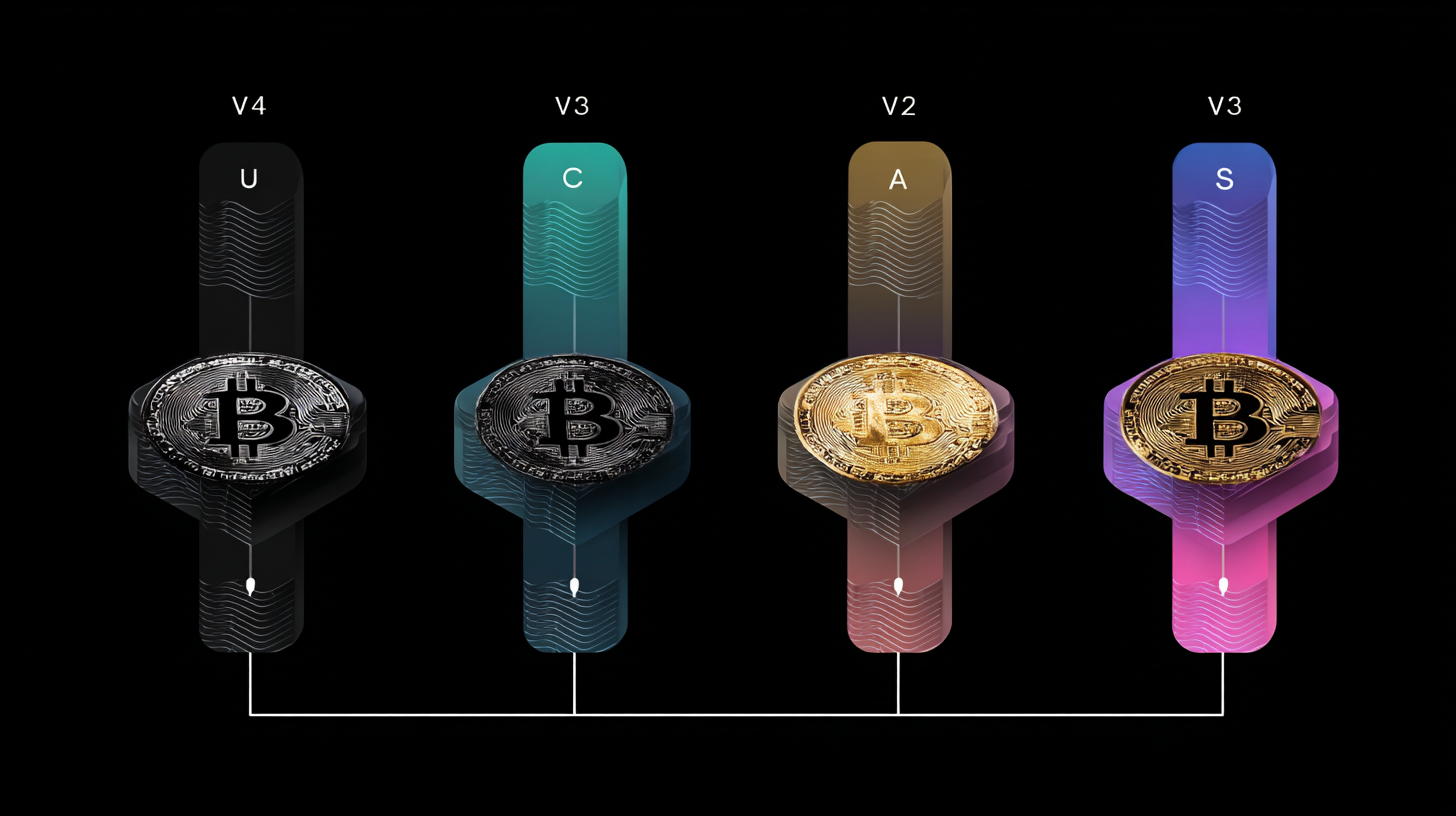
Uniswap has shipped four major protocol versions, and three of them still see meaningful daily volume. Each version targets a different trade-off between simplicity, capital efficiency, and customization. Older contracts never get sunset because they cannot be sunset, so traders pick versions based on what fits the asset.
Uniswap V2 Mechanics and Continued Use
Uniswap V2 launched in May 2020 and brought direct ERC-20 to ERC-20 pairs, removing the V1 quirk that forced every trade to route through ETH. The architecture sits on a constant product formula where the product of token reserves stays fixed during swaps, with a flat 0.30% fee paid to liquidity providers on every trade. V2 added flash swaps, letting traders pull tokens out of a pool within a single transaction as long as the borrowed amount plus fees gets returned before the transaction ends. Price oracles became cumulative, which lets external contracts compute time-weighted averages that resist single-block manipulation. Liquidity positions are represented by fungible LP tokens, transferable like any ERC-20 and usable as collateral on lending platforms. V2 still gets steady volume on long-tail tokens where concentrated liquidity offers little benefit and on chains where V3 deployment came later.
Uniswap V3 and Concentrated Liquidity
Uniswap V3 went live in May 2021 and changed the LP model entirely by letting providers concentrate capital inside specific price ranges instead of spreading it from zero to infinity. Capital efficiency jumped by orders of magnitude, particularly on stablecoin pairs where prices barely move and tight ranges capture nearly all the volume. Multiple fee tiers replaced the single 0.30% V2 fee, with options of 0.01%, 0.05%, 0.30%, and 1.00% letting pools match their economics to asset volatility. Position ownership shifted from fungible LP tokens to non-fungible NFTs because every position has unique price boundaries. Active management became a real strategy, with sophisticated providers rebalancing ranges and using vault protocols to automate the work. V3 currently settles the majority of Uniswap volume across mainnet, Arbitrum, Base, Optimism, and other deployments.
Uniswap V4 Architecture and Hooks
Uniswap V4 went live in early 2025 with two structural changes that quietly rebuild the protocol from the inside. The first is a singleton contract holding every pool inside one address, replacing the V3 model where each pool got its own contract deployment. Pool creation costs dropped roughly 99% because spinning up a new pool is now a state change rather than a contract deployment, and swaps got cheaper through flash accounting. The second change is hooks, which let developers attach arbitrary logic to swap, mint, and burn events on any pool they create. Dynamic fees, custom oracles, on-chain limit orders, time-weighted average market makers, and permissioned pools all become buildable without forking the protocol. Native ETH support also returned, removing the WETH wrapping step that V2 and V3 required.
Uniswap Pools and Liquidity Provision

uniswap-pools-and-liquidity-provision
Uniswap pools are the on-chain venues where token pairs sit and trades execute, with each pool charging a fee on every swap and routing that fee back to providers. Pool selection drives yield, impermanent loss exposure, and capital efficiency in equal measure. Picking the right pool is the single most important decision an LP makes.
Fee Tiers on Uniswap DEX
Fee tier choice shapes the economics of any liquidity position on Uniswap V3 and V4 pools across the DEX. Stablecoin pairs like USDC/USDT typically use the 0.01% tier where volume is enormous and price divergence is minimal, so a small fee on huge throughput beats a large fee that pushes traders to a cheaper venue. Major correlated pairs such as ETH/USDC commonly settle at 0.05%, balancing fee income against the risk of losing volume. Standard pairs default to 0.30%, the tier inherited from V2 economics and still the right answer for mid-cap tokens that move independently from ETH. Exotic pairs usually live at 1.00% where impermanent loss risk runs high and providers need real compensation for parking capital there.
| Fee Tier | Typical Use Case | Example Pairs |
|---|---|---|
| 0.01% | Stable-to-stable | USDC/USDT, DAI/USDC |
| 0.05% | Highly correlated | ETH/USDC, WBTC/ETH |
| 0.30% | Standard pairs | ETH/UNI, ETH/LINK |
| 1.00% | Exotic or volatile | Long-tail tokens |
Picking the Right Pool
Picking a pool inside the Uniswap app means looking at three numbers and ignoring most of the rest. Total value locked tells the depth, 24-hour volume tells the fee throughput, and the ratio between them tells the rough APR a passive position might earn. A pool with $50M TVL and $20M daily volume on a 0.05% tier earns LPs roughly $10K daily, which annualizes into a respectable yield before any impermanent loss adjustments. New pools often show inflated APRs because TVL hasn't caught up to volume yet. The interface surfaces all three metrics on every pool page, along with historical fee accumulation and price ranges where existing liquidity sits.
The decision usually breaks down like this:
- Identify the pair to provide liquidity for.
- Compare TVL and volume across available fee tiers.
- Calculate rough APR from the volume-to-TVL ratio.
- Decide on a price range based on volatility expectations.
- Check for active LP incentive programs on that pool.
- Approve token spending and deposit through the interface.
- Monitor the position and rebalance ranges when needed.
LP Returns and Impermanent Loss
LP returns on Uniswap come from two sources: trading fees collected by the pool and external incentives layered on top through governance grants or third-party programs. Impermanent loss subtracts from those returns whenever the price ratio between the two pool assets shifts against the LP's entry point. The math gets sharper on V3 because concentrated ranges amplify both the fees earned when price stays inside the range and the losses when price moves outside it. Stablecoin pairs see almost no impermanent loss but earn smaller fees per dollar of capital. Volatile pairs flip the equation, paying generous fees while exposing the position to meaningful divergence loss. Active managers rebalance to keep capital where the trading happens, while passive LPs pick wider ranges and accept lower fee capture.
app.uniswap and the Uniswap App Setup
app-uniswap-and-uniswap-app-setup
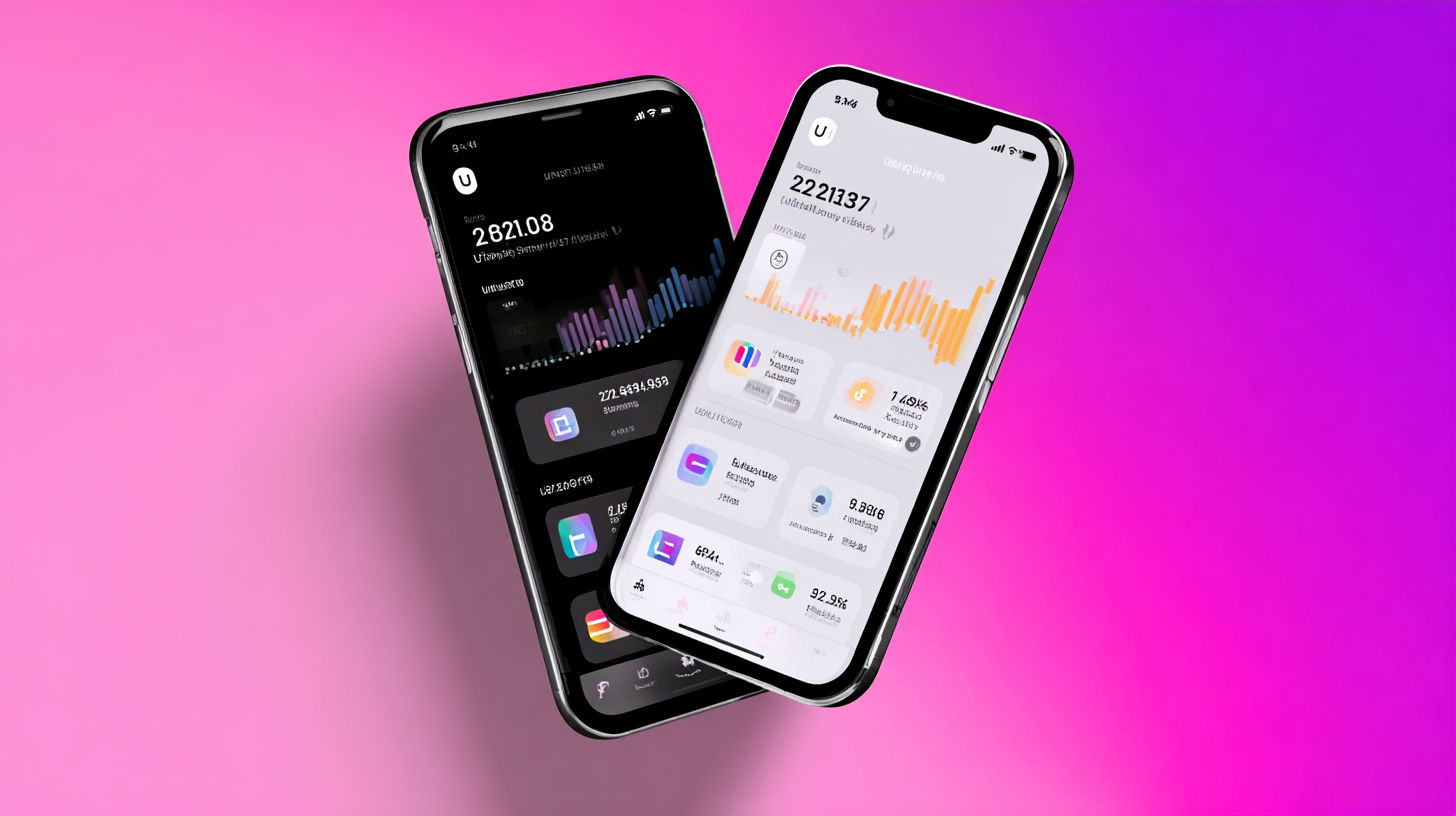
The official front-end lives at app.uniswap.org and serves as the main route for swapping, providing liquidity, bridging, and managing positions across every supported chain. Uniswap Labs also ships a mobile wallet on iOS and Android plus a browser extension, all built on the same routing engine. Self-custody runs through the entire stack.
Connecting Wallets to the Uniswap Exchange
The Uniswap exchange supports most wallets through native connectors and the WalletConnect protocol, covering nearly every wallet anyone might already have installed. MetaMask remains the most common entry point for desktop users because it has been around longest and integrates cleanly with hardware wallets like Ledger and Trezor. Rabby has gained ground among power users for its better transaction simulation and risk warnings. Coinbase Wallet covers the audience coming from the Coinbase exchange. The Uniswap Wallet app, built by Labs, ships with smart account features including gasless swaps on certain chains and easier onboarding for users who don't already hold ETH.
Wallet support across the Uniswap interface includes:
- MetaMask through native browser integration
- Coinbase Wallet via direct connector or mobile WalletConnect
- Rabby for advanced transaction simulation and warnings
- Ledger and Trezor through MetaMask or direct WalletConnect
- Uniswap Wallet on iOS, Android, and Chrome extension
- Any WalletConnect-compatible mobile or hardware wallet
Mobile Uniswap App and Browser Extension
The mobile Uniswap app gives traders access to swaps, liquidity, and bridging from a phone without dealing with browser-based wallet popups. It runs on iOS through the App Store and on Android through Google Play, and ships with built-in fiat onramps for buying tokens with cards or bank transfers in supported regions. The browser extension does the same job inside Chrome, Brave, and other Chromium browsers, replacing or complementing MetaMask for users who prefer the Uniswap-native experience. Both products share the same routing engine that powers the web app, so prices and quote quality match across surfaces. Switching between mobile and desktop is seamless because the seed phrase moves with the user rather than being tied to a single device.
Bridging and Cross-Chain Routing
Cross-chain routing inside the Uniswap app lets traders swap tokens on one chain and receive them on another in a single flow rather than bouncing between bridges and DEXs manually. The interface integrates Across, the bridge protocol that handles the underlying message passing, and routes the destination swap through Uniswap pools on the receiving chain. Total time from signing to settlement usually runs under a minute for major chains. This matters because moving capital between Ethereum mainnet and any L2, or between two L2s, used to involve three or four separate steps with three or four separate UIs. Now it happens in one transaction approval.
Uniswap Token and Governance
uniswap-token-and-governance
The Uniswap token, ticker UNI, was distributed in September 2020 through a retroactive airdrop to anyone who had used the protocol before that date. UNI is the governance asset of the Uniswap DAO and represents a vote on protocol-level decisions. The token trades on Uniswap itself plus most major centralized exchanges.
How UNI Voting Power Works
UNI holders vote on proposals affecting protocol parameters, treasury allocation, deployments to new chains, and grant funding through the Uniswap DAO governance process. Proposals move through three stages: temperature check on Snapshot, consensus check, then on-chain vote requiring a quorum of delegated tokens. Delegation lets holders assign voting power to active community members or research firms without ever transferring tokens, which keeps participation accessible for passive holders. Major delegates include university blockchain clubs, DeFi research firms, and individual contributors who publish their voting rationale publicly. Big debates including the fee switch and deployments to BNB Chain and Polygon all moved through this pipeline before taking effect.
Treasury and Grants Funded by UNI Holders
The treasury under UNI governance ranks among the largest in DeFi, holding billions in UNI plus a smaller balance of stablecoins and other assets. Funds get deployed through grant programs, retroactive funding, and direct allocations approved by governance vote. The Uniswap Foundation operates as a grant-making body funded by treasury allocations, with mandates spanning protocol research, integrations, security audits, and developer tooling. Recipients have included academic groups studying AMM design, security firms running ongoing audits, and teams building infrastructure that benefits the broader ecosystem. The fee switch, which would route a portion of pool fees to a treasury or staking contract, has been debated extensively without yet being activated at protocol level.
UNI Beyond Governance
UNI utility extends beyond pure governance because the token is one of the more liquid ERC-20 assets in the entire market. UNI trades in deep pools on Uniswap itself, on Coinbase, Binance, Kraken, and most other major venues, which makes it usable as collateral on lending platforms like Aave and Compound. Some structured products and yield aggregators include UNI-denominated strategies, and the token shows up as a reserve asset in DAO treasuries beyond Uniswap's own. The combination of liquidity, governance rights, and broad integration coverage makes the token more than a pure voting share.
Uniswap DEX Security and Track Record

uniswap-dex-security-track-record
The Uniswap DEX has run continuously since November 2018 without a single core protocol exploit, which is rare in DeFi where most major protocols have suffered at least one significant incident. Security comes from minimalist contract design, extensive auditing, and the immutability of deployed contracts that can't be patched into a vulnerability.
Audits and Bug Bounty Programs
V2, V3, and V4 contracts went through multiple independent audits before launch, with firms including Trail of Bits, ABDK Consulting, OpenZeppelin, and Consensys Diligence reviewing the code. Bug bounties through Immunefi reach up to $15.5 million on V4, placing them among the highest payouts in the entire industry. Formal verification covers critical math libraries, particularly the tick math and swap math that underpin V3 and V4 pricing. The V2 codebase has handled hundreds of billions in cumulative volume with the original contracts still running unchanged. Independent researchers continue to probe the contracts for edge cases, and the bug bounty has paid out multiple times for issues caught before they could be exploited.
Where User Risk Actually Lives
Real risk for Uniswap users sits at the token level rather than the protocol level. Malicious tokens with hidden transfer hooks, honeypots that block selling, and rugpulls where deployers drain liquidity all happen on a daily basis to traders who ape into pools without checking what they're buying. The Uniswap interface flags unverified tokens with warnings and refuses to display tokens with obvious malicious patterns by default. MEV sandwich attacks can drain a few percent from large swaps on volatile pairs, and slippage settings need to be tight on anything where price impact would otherwise let bots front-run the order. Phishing front-ends impersonating app.uniswap.org show up in search ads and on hijacked social posts, and the only real defense is bookmarking the real URL.
Comparing Uniswap to Other DEX Options
Uniswap competes with a long list of other DEXs, each making different design trade-offs. SushiSwap forked V2 early and has expanded across chains while bolting on additional products. Curve specializes in stablecoin and pegged-asset trading with a custom invariant that beats constant-product math for those pairs. Balancer offers weighted pools beyond the standard 50/50 split, useful for portfolio rebalancing. PancakeSwap dominates on BNB Chain with heavy retail volume. Aerodrome leads on Base with a ve-token model that ties governance to liquidity locking.
| DEX | Specialty | Primary Chains |
|---|---|---|
| Uniswap | General AMM | Ethereum and most L2s |
| Curve | Stablecoin pairs | Ethereum, multiple L2s |
| Balancer | Weighted pools | Ethereum, L2s |
| PancakeSwap | Retail volume | BNB Chain mainly |
| Aerodrome | ve-tokenomics | Base |
| SushiSwap | Multi-chain V2 fork | Many chains |
FAQ
Is Uniswap safe for swapping tokens?
The Uniswap protocol contracts have run without a core-level exploit since 2018 and have processed trillions in cumulative volume. Risk concentrates around individual tokens and phishing front-ends rather than the protocol itself.
What is the difference between Uniswap V2, V3, and V4?
V2 uses a constant product formula across the full price range with a flat 0.30% fee. V3 introduced concentrated liquidity and four fee tiers for higher capital efficiency. V4 added a singleton contract architecture and hooks for custom pool logic.
Does Uniswap have its own token?
The Uniswap token UNI was distributed in September 2020 and serves as the governance asset of the Uniswap DAO. Holders vote on protocol upgrades, treasury allocation, ecosystem grants, and chain deployments.
Where does the official Uniswap app run?
The official Uniswap app runs at app.uniswap.org for desktop browsers, with mobile applications available on iOS and Android. A browser extension is distributed by Uniswap Labs through the Chrome Web Store.
Which chains support Uniswap exchange contracts?
Uniswap exchange contracts run on Ethereum mainnet, Arbitrum, Optimism, Polygon, Base, BNB Chain, Avalanche, Celo, Blast, Zora, World Chain, and Unichain.
Are there fees for trading through Uniswap pools?
Each pool charges a swap fee that flows to liquidity providers, ranging from 0.01% to 1.00% depending on the tier. The Uniswap interface charges a small additional fee on certain swaps that goes to Uniswap Labs.
What does Uniswap Labs do?
Uniswap Labs builds the official front-end, the mobile wallet, the browser extension, and developer tooling for the Uniswap protocol. The company operates separately from the on-chain protocol, which runs as autonomous smart contracts governed by UNI holders.